CCS vs. CPC: Which Certification Is Right for You? (2026)
CCS and CPC are two of the most recognized medical coding certifications, but they're built for different parts of the healthcare system. Choosing between them depends largely on whether you want to work in hospital-based coding or physician/outpatient coding.
What Is CCS Certification?
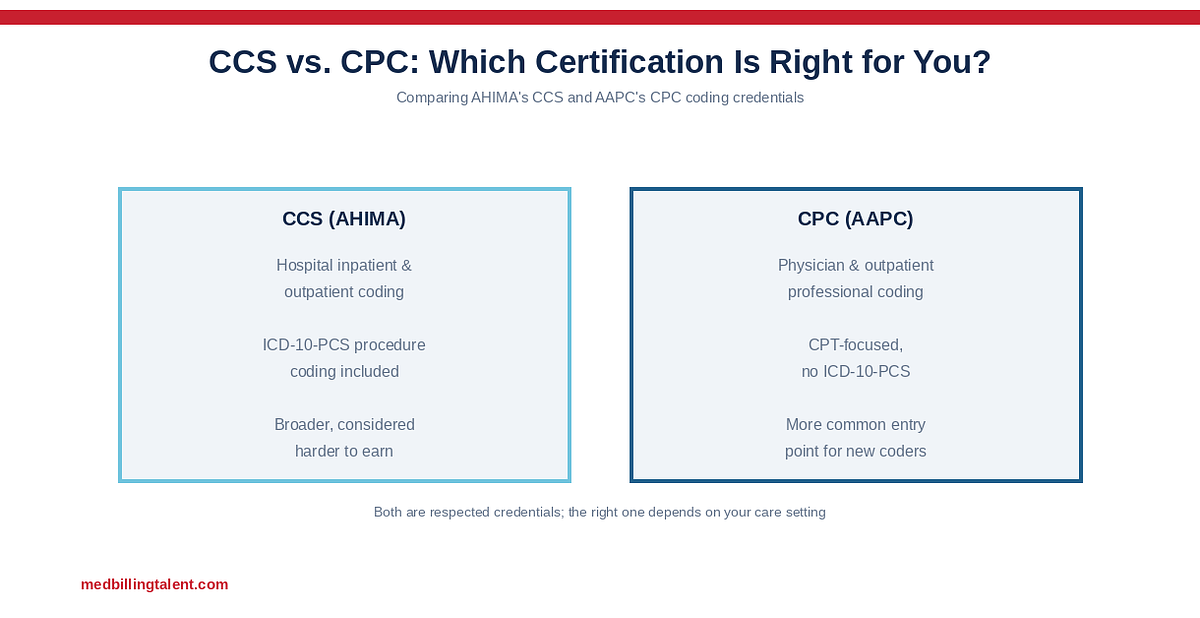
CCS (Certified Coding Specialist) is issued by AHIMA and covers hospital inpatient and outpatient coding, including ICD-10-PCS procedure coding, which is unique to inpatient hospital settings. It's generally considered a broader and more difficult credential to earn.
What Is CPC Certification?
CPC (Certified Professional Coder) is issued by AAPC and focuses on physician and outpatient professional fee coding using CPT codes. It's one of the most common entry points into medical coding and doesn't require ICD-10-PCS knowledge.
CCS vs. CPC: Key Differences
The core difference is care setting: CCS is built for hospital coding across both inpatient and outpatient departments, while CPC is built for physician offices and outpatient professional billing. CCS includes ICD-10-PCS procedure coding, which CPC does not test. Many coders view CCS as the harder exam because of its broader scope.
Which Certification Should You Get?
If you want to work in a hospital coding department, especially inpatient coding, CCS is the more relevant credential. If you're targeting physician practices, outpatient clinics, or are newer to coding, CPC is a common and accessible starting point. Some coders eventually hold both certifications to open up opportunities across care settings.
Related Articles:
Where to find remote roles
Browse open CCS Certified Coder positions on Med Billing Talent.