Risk Adjustment Coding Explained: RAF Scores and Medicare Advantage
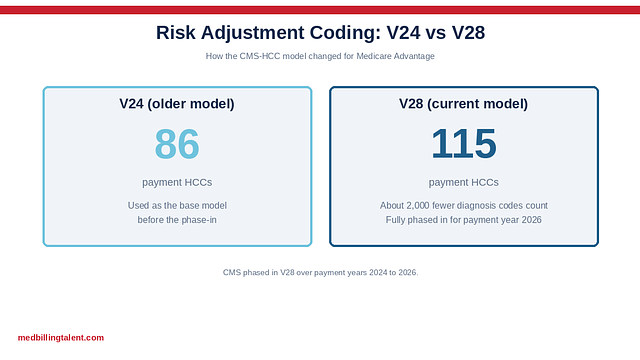
A plain-English guide to risk adjustment coding: how HCCs and RAF scores drive Medicare Advantage payment, what changed in V28, and why audits matter.
Insights, tips, and industry news
Career guides, salary data, and practical advice for medical billing, medical coding, and revenue cycle management professionals in the United States. Whether you're just starting out or looking to specialize, you'll find breakdowns of what different roles actually pay, what certifications are worth pursuing, and how to find a legitimate remote position in this field.
New here? Start with the Medical Biller Salary Guide or see how to land your first role if you're breaking into the field.
A plain-English guide to risk adjustment coding: how HCCs and RAF scores drive Medicare Advantage payment, what changed in V28, and why audits matter.
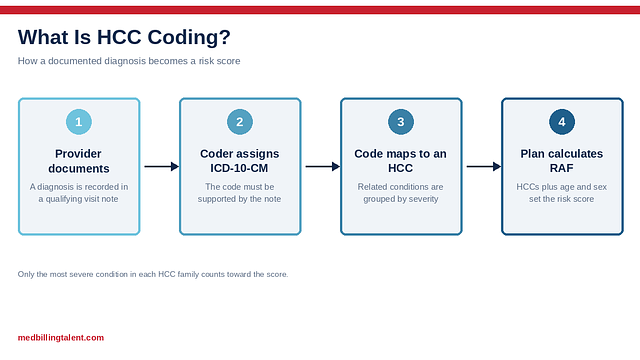
A plain-English explanation of HCC coding: what Hierarchical Condition Categories are, how diagnoses turn into risk scores, and what HCC coders do.
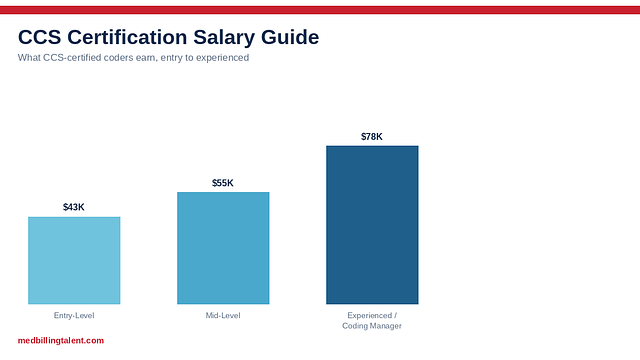
What CCS-certified coders earn from entry-level to experienced and coding management roles, based on real job posting data.
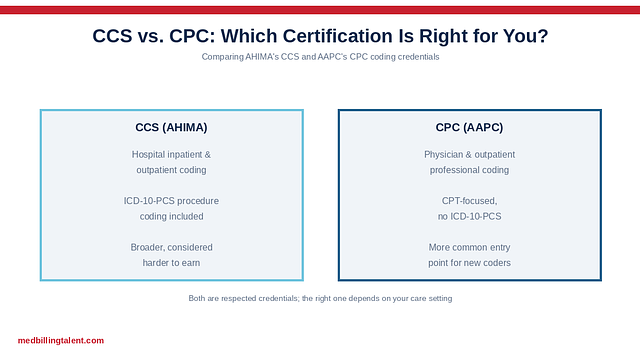
A comparison of AHIMA's CCS and AAPC's CPC coding certifications, covering scope, difficulty, and which fits different career paths.
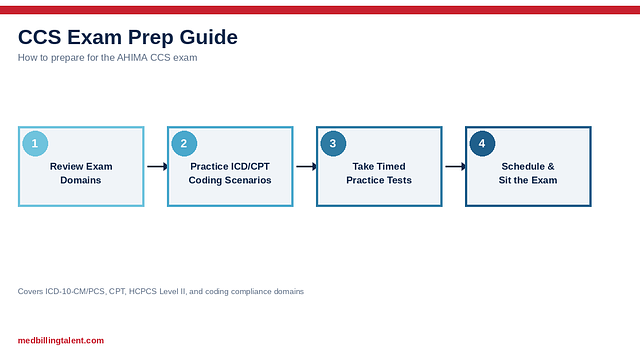
How to prepare for the AHIMA CCS exam, including what domains to study, how to practice coding scenarios, and tips for exam day.
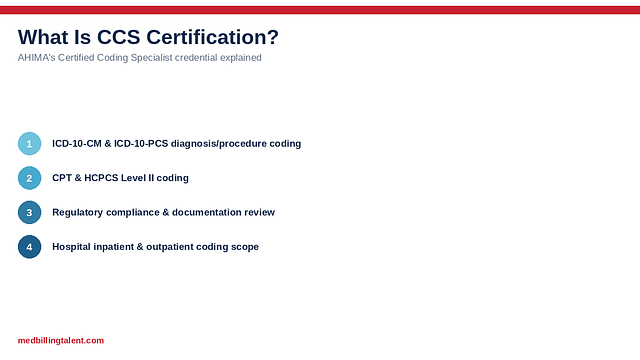
An overview of AHIMA's Certified Coding Specialist (CCS) credential: what it covers, who it's for, and how to become certified.
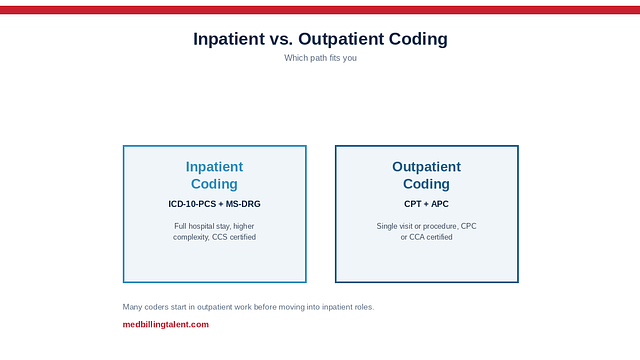
A comparison of inpatient and outpatient medical coding - systems used, complexity, and certification paths.
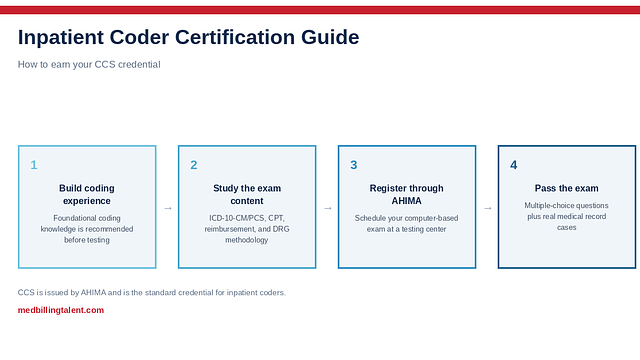
A guide to the CCS certification for inpatient coders - eligibility, exam content, and how to prepare.
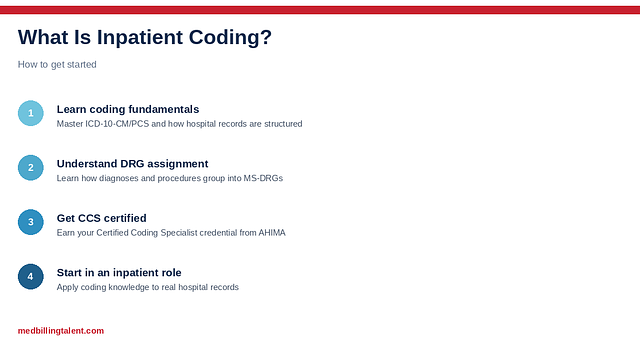
An introduction to inpatient coding - what it is, how to get started, and what the role involves day to day.
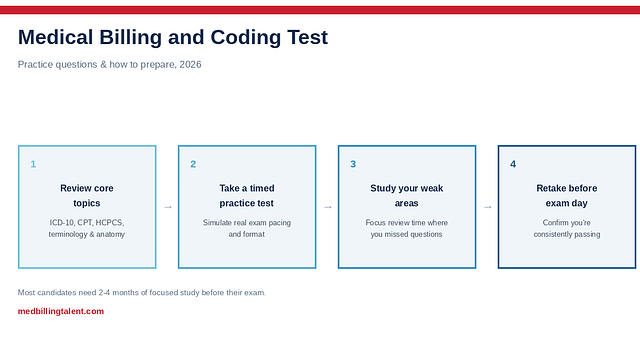
What to expect on a medical billing and coding test, sample question types, and a realistic study plan to prepare.
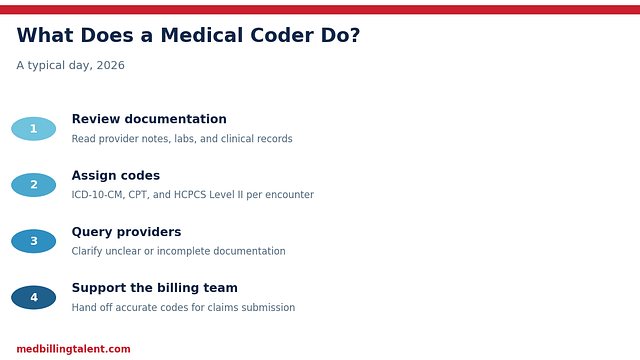
A real look at what medical coders actually do all day - reviewing charts, assigning codes, working with providers and billers - plus the tools and skills the job actually requires.
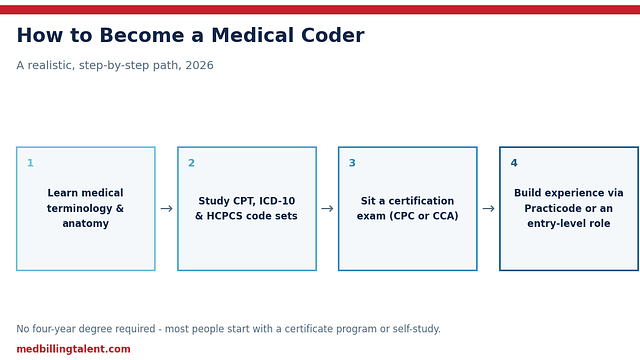
A realistic, step-by-step path into medical coding with no experience - what to study, which certification to sit first, and how to get past the "2 years experience" wall on your first job search.