
What Does a Medical Coder Do? Job Description & Day-to-Day (2026)
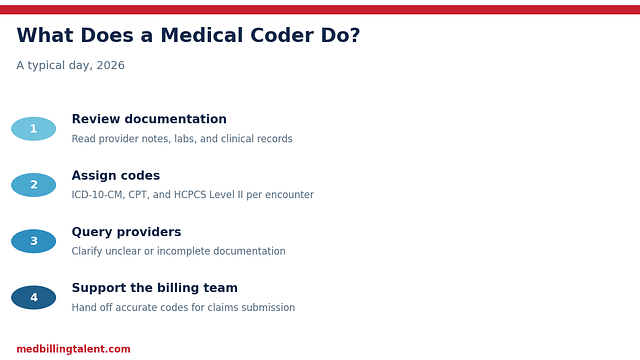
A real look at what medical coders actually do all day - reviewing charts, assigning codes, working with providers and billers - plus the tools and skills the job actually requires.
Insights, tips, and industry news
Career guides, salary data, and practical advice for medical billing, medical coding, and revenue cycle management professionals in the United States. Whether you're just starting out or looking to specialize, you'll find breakdowns of what different roles actually pay, what certifications are worth pursuing, and how to find a legitimate remote position in this field.
New here? Start with the Medical Biller Salary Guide or see how to land your first role if you're breaking into the field.
A real look at what medical coders actually do all day - reviewing charts, assigning codes, working with providers and billers - plus the tools and skills the job actually requires.
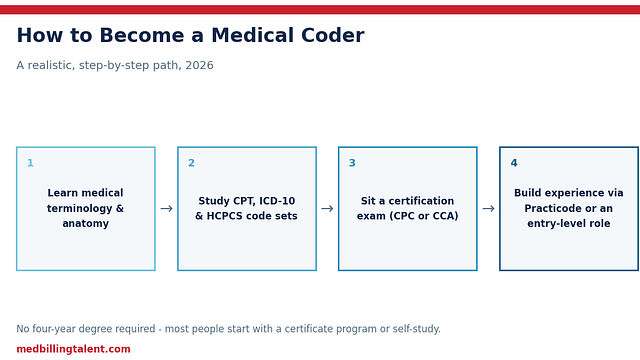
A realistic, step-by-step path into medical coding with no experience - what to study, which certification to sit first, and how to get past the "2 years experience" wall on your first job search.
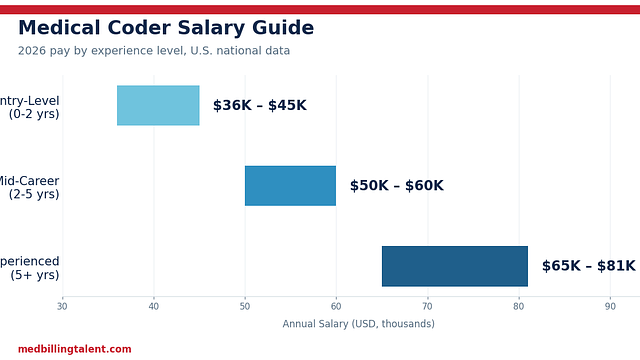
What medical coders actually earn in 2026, broken down by experience level and certification, plus how specialty coding and remote work affect pay.
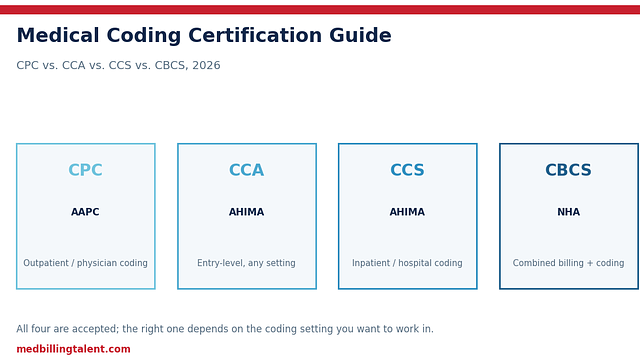
A comparison of the four main medical coding certifications - CPC, CCA, CCS, and CBCS - covering who issues each one, what it costs, and which one actually matches the job you want.
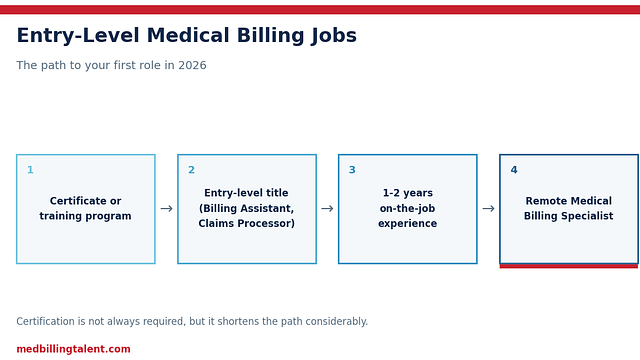
How to break into medical billing with no experience, typical entry-level titles and pay, whether you need certification first, and a realistic path to a remote role.
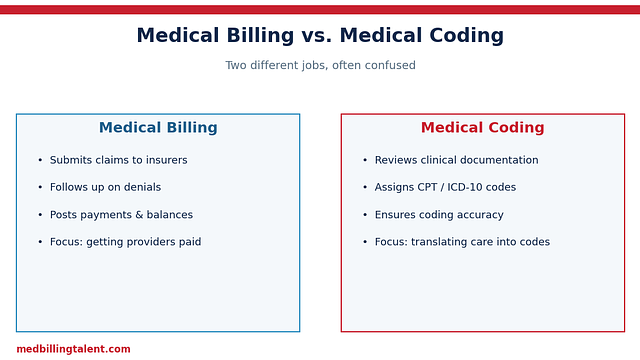
Medical billing and medical coding are often used interchangeably but are two distinct jobs. Here's what each role actually does, where they overlap, and which pays more.
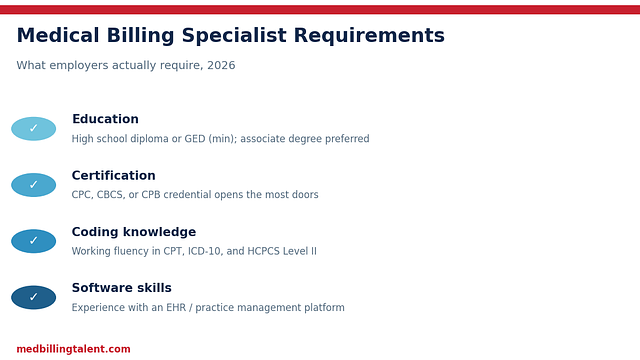
What employers actually require for medical billing specialist roles in 2026 - education, top certifications (CPC, CBCS, CPB), and the coding/software skills that matter most.
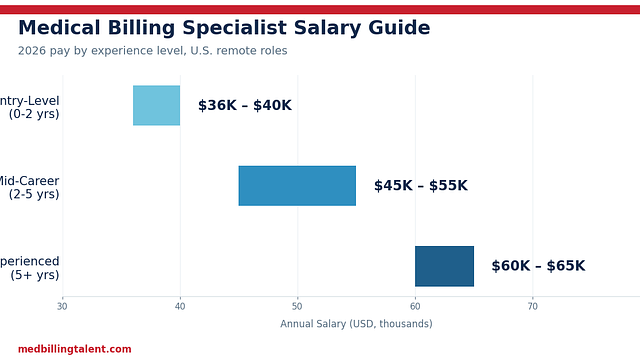
A breakdown of what medical billers earn in 2026 by experience level and certification, plus the factors - software fluency, employer type, remote arbitrage - that most affect pay.