Accounts Receivable Specialist vs Clerk vs Analyst: Differences and Pay (2026)
Accounts receivable job titles overlap a lot, and employers do not use them consistently. A clerk at one company may do the same work as a specialist at another. Still, there are clear patterns in scope, responsibility, and pay. This guide breaks down the accounts receivable specialist, clerk, and analyst roles so you know which to apply for.
Accounts Receivable Clerk vs Specialist vs Analyst: The Short Answer
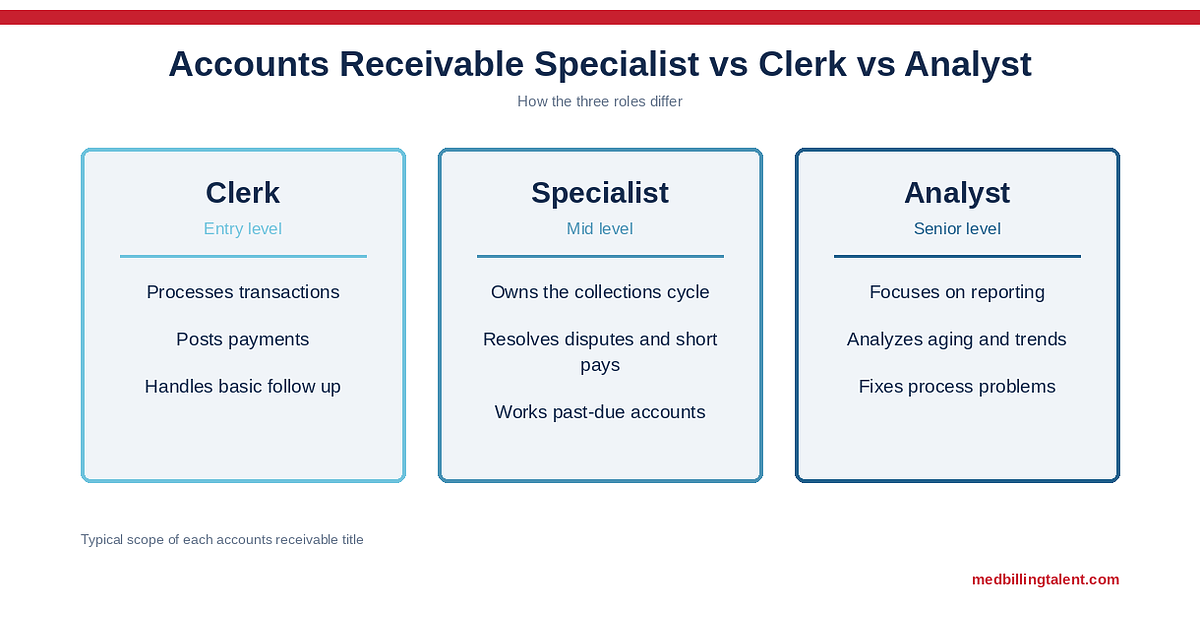
- Clerk: processes transactions. Posts payments, enters data, and handles basic follow up. Usually the entry level title.
- Specialist: owns more of the collections cycle. Works past-due accounts, resolves disputes and short payments, and often handles larger or more complex accounts.
- Analyst: focuses on reporting and improvement. Reviews aging, spots trends, forecasts collections, and fixes process problems.
What does an accounts receivable clerk do?
If you are browsing accounts receivable clerk jobs (or "account receivable clerk jobs"), expect mostly hands-on, high-volume work: entering invoices, posting payments, matching deposits to accounts, answering routine billing questions, and flagging problems for someone more senior. Clerk roles are the most common starting point, and our guide to entry level accounts receivable jobs covers how to get one.
What does a receivable specialist do?
A receivable specialist goes beyond data entry. You are responsible for getting past-due balances paid. That means contacting customers or payers, investigating disputes, correcting billing errors, negotiating payment plans, and documenting everything. Specialists usually need one to three years of experience. For the full job description, skills, and career path, see our accounts receivable specialist guide.
What does an accounts receivable analyst do?
An accounts receivable analyst works at a higher level. Instead of working every account, you look at the whole portfolio: aging trends, days outstanding, bad debt risk, and which customers or payers are slowing cash flow. Analysts build reports, recommend changes to collection procedures, and support month-end close. Many employers prefer an accounting or finance degree and stronger Excel skills.
What about an accounts receivable processor?
You will also see "accounts receivable processor" in listings. It usually overlaps with the clerk role, with the emphasis on processing invoices and payments quickly and accurately. Read the duties rather than the title, since the same job may be called a clerk, processor, or associate.
Pay comparison
All figures below come from Robert Half's 2026 salary pages. Clerk and specialist ranges are from its general pages. Analyst ranges are metro examples, so they run higher in expensive cities.
- Accounts receivable clerk: about $44,000 to $58,000
- Accounts receivable specialist: about $54,750 to $65,750, with a middle point near $60,000
- Accounts receivable analyst: about $61,065 to $75,814 in Kansas City, $66,670 to $82,773 in Phoenix, and $78,470 to $97,423 in Boston
The better comparison is the same city. In Kansas City, Phoenix, Boston, and Hartford, the analyst range starts roughly $4,000 to $6,000 above the specialist range. For example, in Boston the specialist range is about $72,800 to $87,400, while the analyst range is about $78,500 to $97,400. The step from analyst to accounts receivable manager is larger: Robert Half lists Boston AR managers at about $95,400 to $135,000.
Which title should you target?
- No AR experience: apply for clerk, billing clerk, or payment poster roles.
- One to three years of experience: go for specialist roles, which add collections and dispute resolution to your resume.
- Strong Excel and reporting skills, ideally with a degree: aim for analyst roles.
- Want to work from home: specialist roles are the most common remote AR title. Our guide to remote accounts receivable specialist jobs explains what remote employers expect.
How these titles work in medical billing
In healthcare, the same ladder exists, but the focus shifts to insurance claims. A medical AR follow up specialist works unpaid and denied claims, while an analyst tracks denial patterns and days in AR across payers. Read medical billing accounts receivable to see how that work looks day to day.
Where to find remote roles
Browse current openings on our Accounts Receivable Specialist jobs page, or check Medical Billing Specialist jobs for related remote roles. Every listing on Med Billing Talent is remote and US-based.