Medical Billing Accounts Receivable: How AR Works and What AR Specialists Do
In medical billing, accounts receivable (AR) is the money a practice or hospital is owed for care it has already provided. Most of it is waiting on insurance payers, with the rest owed by patients. Managing that money well is what keeps a healthcare provider financially healthy, and it is also a solid career path.
What is medical billing accounts receivable?
Every time a provider treats a patient, a claim goes out to the payer. Until that claim is paid in full, the unpaid amount counts as accounts receivable. You will also see it called medical accounts receivable, medical AR, or "medical A/R." They all mean the same thing: outstanding balances from submitted claims and patient statements.
How medical accounts receivable works
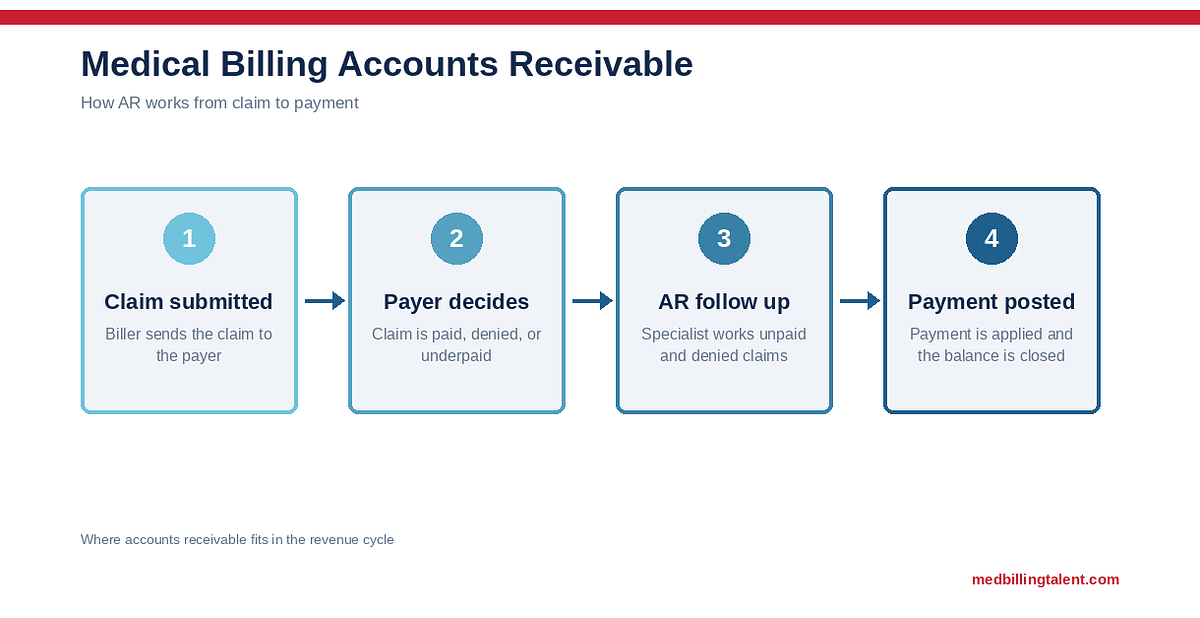
- Claim submitted. The biller sends a clean claim to the payer.
- Payer decides. The claim is paid, denied, or paid at a lower amount than expected.
- AR follow up. Unpaid, denied, and underpaid claims go to the AR team.
- Payment posted. Payments and adjustments are applied, and any patient balance moves to statements.
Accounts receivable in medical billing is really the middle of the revenue cycle. Claims that are paid cleanly never need attention. Everything else lands in AR.
What does "days in AR" mean?
Days in AR is a measure of how long it takes, on average, to collect payment. A lower number means faster collections. MGMA's benchmark for physician groups is under 40 days, and high performers keep it below 30. If the number creeps up, it usually points to a problem upstream, such as claim errors or slow follow up. An MGMA poll from July 2026 found most practices are holding steady on this number, though payer delays and denials keep putting pressure on it.
AR teams also sort balances by age into buckets, typically 0 to 30, 31 to 60, 61 to 90, and over 90 days. The older a claim gets, the harder it is to collect, so specialists prioritize the oldest and highest-dollar claims first.
Why claims sit in accounts receivable
- Denials: missing information, coding errors, or lack of authorization
- Underpayments: the payer paid less than the contracted rate
- Eligibility issues: the patient's coverage was inactive or wrong
- Slow payers: claims stuck in pending status
- Timely filing limits: deadlines that can make late claims uncollectible
Many denials start with a coding mistake, which is why billing and coding teams work so closely. If you are weighing the two careers, read medical billing vs medical coding.
What does an AR follow up specialist do?
An AR follow up specialist works the unpaid claims. A typical day includes:
- Reviewing aging reports and choosing which claims to work first
- Checking claim status on payer portals or making an AR call to the payer
- Finding out why a claim was denied or underpaid
- Correcting and resubmitting claims, or filing appeals
- Documenting every contact and next step in the account notes
- Passing recurring denial patterns back to the billing team
This role is also called an AR specialist in medical billing, and it is often the next step up from payment posting. For the general (non-healthcare) version of the job, including pay ranges and a sample job description, see our accounts receivable specialist guide.
Skills that matter in medical AR
- Knowledge of claim forms, denial codes, and payer rules
- Comfort with phone follow up and payer portals
- Familiarity with practice management or EHR systems
- Persistence and clear note-taking
The work is well suited to remote setups, which is why many employers hire AR staff from home. If you are just starting out, our guide to entry level accounts receivable jobs shows where to begin.
Where to find remote roles
See current openings on our Accounts Receivable Specialist jobs page, or browse Medical Billing Specialist jobs for related roles. Every listing on Med Billing Talent is remote and US-based.