Medical Claims Processor: Job Description, Duties & Skills (2026)
If you enjoy detail-focused work and want a remote-friendly path into healthcare, medical claims processing is worth a look. A medical claims processor reviews healthcare claims, checks them against plan rules, and decides how they should be paid. This guide covers what the job involves, where claims processors work, the skills that matter, and how the role compares with medical billing.
What Is a Medical Claims Processor?
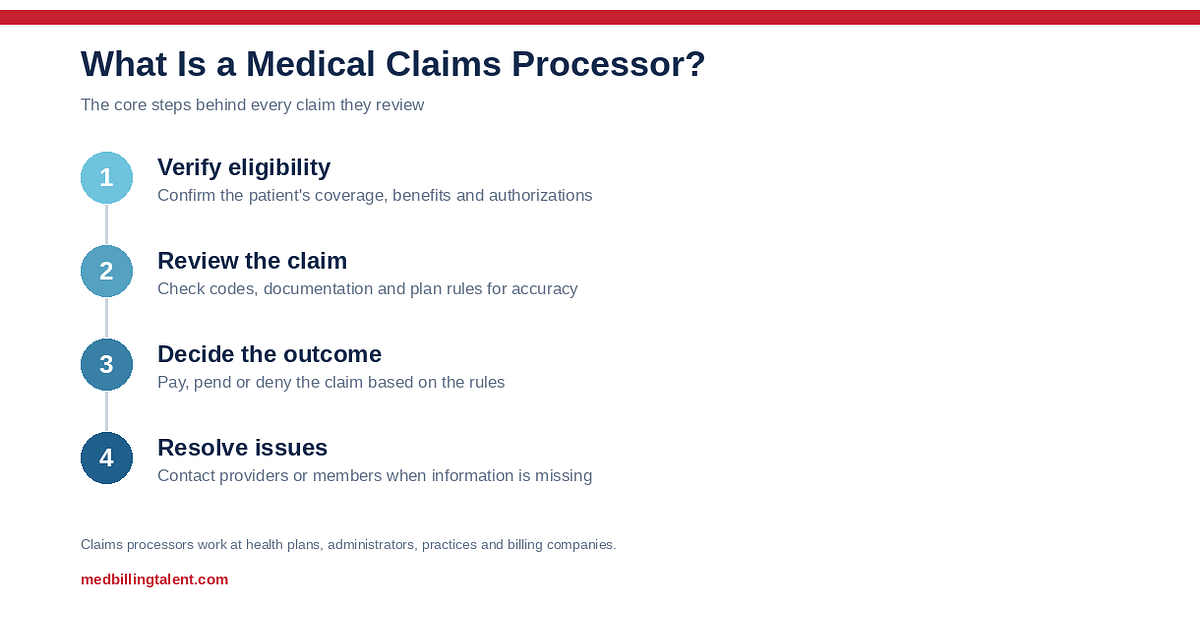
A medical claims processor, also called a medical claims specialist, claims adjudicator or insurance claims processor depending on the employer, reviews claims submitted for healthcare services and determines whether and how much to pay. In practice, a claims processor makes sure each claim is complete, accurate and consistent with the patient's coverage before any payment is made.
What Does a Medical Claims Processor Do?
Most processors work through a daily queue of claims. Typical duties include:
- Verifying patient eligibility, benefits and authorizations
- Checking that diagnosis and procedure codes (ICD-10, CPT, HCPCS) are valid and match the documentation
- Applying payment rules to decide whether to pay, pend or deny a claim
- Catching duplicate claims, unbundled services and other errors
- Contacting providers or members when information is missing
- Recording decisions, following HIPAA rules, and meeting accuracy and speed targets
Where Do Medical Claims Processors Work?
There are two main settings. On the payer side, health plans and third-party administrators receive claims from providers, and the processor adjudicates them. On the provider side, medical practices and billing companies prepare claims, send them to insurers, track rejections and resubmit corrected claims. Job titles overlap, so read the description closely. A claims processor at an insurer is doing payer work, while the same title at a practice is usually billing work.
What Skills Does a Medical Claims Processor Need?
- Close attention to detail and accuracy
- Working knowledge of medical terminology and coding basics
- Comfort with claims software, data entry and Microsoft Office
- Sound judgment when applying payment rules to unusual claims
- Clear written and verbal communication with providers and members
- Respect for patient confidentiality and HIPAA requirements
Medical Claims Specialist vs. Medical Biller: What Is the Difference?
A medical biller prepares and submits claims and follows up on payment for the provider. A payer-side claims processor or specialist receives those claims and decides how to pay them. Both roles need coding knowledge and attention to detail, and people often move from one to the other. If you are also weighing coding as a career, see medical billing vs. medical coding.
What Are the Requirements to Become a Medical Claims Processor?
Most employers ask for a high school diploma or equivalent plus some claims or billing experience, and the amount varies widely. Certification is usually optional. Our guide on how to become a medical claims processor covers the requirements and entry-level steps in detail.
Is Medical Claims Processing a Remote Job?
Often, yes. Claims are worked in secure systems, so many health plans and vendors hire remote medical claims processors, and billing companies also post work from home claims processor jobs. Our guide to remote medical claims processor jobs covers who hires and how to find openings, and our salary guide breaks down pay.
Where to Find Remote Roles
Browse current remote medical claims processor and specialist jobs, or see all remote medical billing jobs. Every listing on Med Billing Talent is remote and US-based.