How to Become a Medical Claims Processor: Requirements & Entry-Level Path (2026)
Medical claims processing is one of the more approachable ways into healthcare administration. The entry bar is usually a diploma and a good eye for detail, and the path leads to higher-paying examiner and analyst roles. This guide covers how to become a medical claims processor, what employers require, and which entry-level jobs to look for.
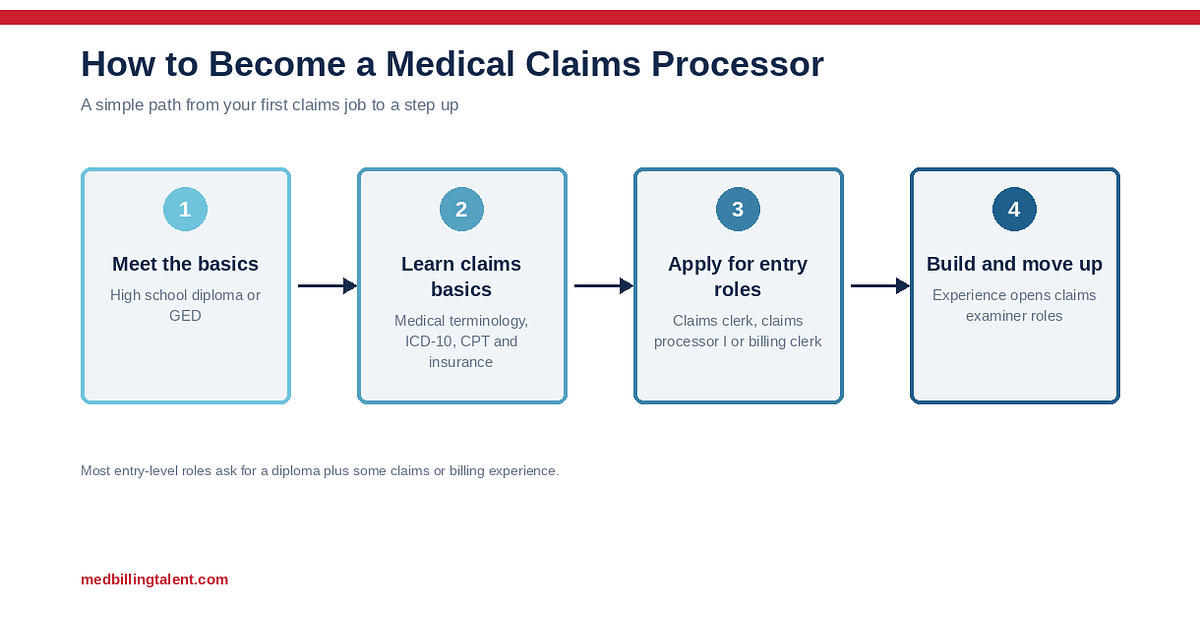
How Do You Become a Medical Claims Processor?
- Finish high school or earn a GED, which is the usual minimum education.
- Learn the basics: medical terminology, how health insurance works, and the ICD-10, CPT and HCPCS code sets. A short billing and coding course or community college class helps.
- Build computer skills, especially data entry, Microsoft Office and comfort learning claims software.
- Apply for entry-level roles such as claims clerk, claims processor I, or billing clerk.
- Build experience and move up to examiner, analyst or auditor roles.
What Are the Requirements for a Medical Claims Specialist?
Employers vary, but most postings follow a pattern. A high school diploma or equivalent is the baseline, and some prefer an associate degree. Experience requirements range from none or one year for entry-level roles to two to five years for senior ones. Employers also look for familiarity with ICD-10, CPT and HCPCS, an understanding of medical terminology, and the ability to handle confidential records under HIPAA.
Do You Need a Certification to Be a Medical Claims Specialist?
Usually not. Certification is optional for most claims processor roles, though some employers prefer a billing or coding credential. If you want one, common options include the AAPC's CPB (Certified Professional Biller) and the NHA's CBCS (Certified Billing and Coding Specialist). Our medical coding certification guide compares the main credentials.
Can You Become a Claims Processor With No Experience?
Yes, for some roles. Entry-level postings at health plans and vendors often ask for a diploma and offer training. Many remote roles ask for more, so expect to build a year or two of experience before applying to the most competitive ones.
What Are Entry-Level Medical Claims Jobs?
Search for titles like claims processor I, claims clerk, claims examiner trainee, billing clerk and payment poster. Health plans, third-party administrators and billing companies are the most common employers. For a broader look at starter roles, see our guide to entry-level medical billing jobs.
How Do You Move Up From Claims Processor?
With experience handling complex claims, you can move into claims examiner, analyst or audit roles, which pay more than processor positions. See what each level earns in our medical claims processor salary guide.
Where to Find Remote Roles
Browse current remote medical claims processor and specialist jobs, or see all remote medical billing jobs. Every listing on Med Billing Talent is remote and US-based.