CPC-A Apprentice Status: What It Means & How to Remove It (2026)
You passed the CPC exam, but your credential reads CPC-A instead of CPC. That small "A" worries a lot of new coders, so here is what it means, what employers think of it, and exactly how to remove it.
What Is CPC-A (CPC Apprentice)?
CPC-A is the apprentice version of the Certified Professional Coder credential from AAPC. If you pass the CPC exam without two years of coding experience, AAPC awards you the CPC-A. The "A" stays on your credential until you prove the experience. It is not a lesser exam, and you do not retake anything to lose it. For the full exam details, see our CPC exam guide.
CPC-A vs. CPC: What Is the Difference?
The exam is the same, and so is the passing score of 70%. The only difference is the experience AAPC has verified. A CPC holder has shown two years of coding experience, and a CPC apprentice has passed the test but has not yet submitted that proof. Many employers accept CPC-A coders for entry-level positions, although some postings ask for a full CPC or prior experience.
How to Remove the Apprentice Designation from Your CPC
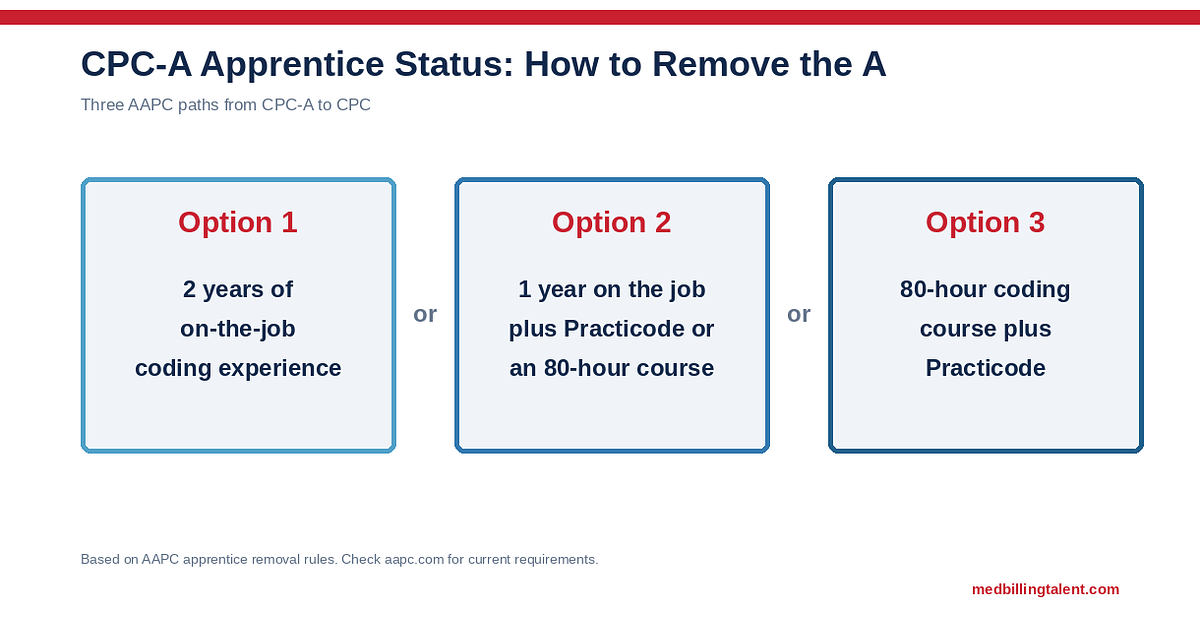
AAPC needs verification of the equivalent of two years of experience. There are three ways to get there:
- Two years on the job: Employer verification of at least two years of coding experience with CPT, ICD-10-CM, or HCPCS Level II codes.
- One year on the job plus education: One year of verified coding experience, plus either an 80-hour coding preparation course or AAPC's Practicode program.
- Education only: An 80-hour coding course and Practicode completed together.
Experience from before and after you became certified can count, and externships are accepted. You submit your documents through AAPC's apprentice removal application, and AAPC lists a processing time of about two to four weeks. Verification letters should describe the coding work you did and how long you did it.
What Is Practicode?
Practicode is AAPC's hands-on practice program, where you code realistic cases the way you would on the job. It is included in most AAPC training packages, and AAPC counts it as one year toward the two-year requirement. AAPC also lists Project Xtern, a program that gives you coding experience AAPC applies toward the requirement. Availability and details change, so check AAPC before you enroll in either one.
How Long Does It Take to Remove the A?
It depends on which option fits your situation. With a coding job, two years of work does it on its own. If you add Practicode or an 80-hour course, you need only one year of work. Under the third option, some candidates can clear the A without holding a coding job, as long as they finish both the course and Practicode. If you are still in the study stage, our CPC exam prep guide covers how to get ready for the test itself.
Can You Get a Job with CPC-A?
Yes. Employers hire CPC-A coders every day, especially for entry-level and "Coder I" roles in physician offices, billing companies, and health systems. Real experience is the best way to remove the A and raise your pay, so take a first role even if it is not your dream job. Billing and charge-entry roles are a common starting point, and our guide to entry-level medical billing jobs shows how to land one. For coding-specific openings, read our guide to entry-level and remote CPC coder jobs. And if you are weighing other starting points, how to become a medical coder explains the full path.
Does the CPC-A Affect Your Pay?
Apprentice coders usually start below the average CPC salary, and pay tends to rise as experience builds and the A comes off. Our CPC salary guide breaks down what certified coders earn and what moves the number.
Where to Find Remote Roles
Look for openings that accept CPC-A holders on our AAPC CPC jobs page, or browse remote medical coder jobs.