CPC Salary Guide (2026): CPC and CPC-A Pay
What is a CPC salary? According to AAPC's salary data, the average Certified Professional Coder earns about $64,500 a year, and the number moves a lot with experience, work setting, and extra credentials. This guide covers the certified professional coder salary, how certification changes pay, what to expect as a CPC-A, and how to earn more.
What Is the Average CPC Salary?
AAPC's salary-by-credential data puts the average CPC salary at roughly $64,495. PayScale reports a similar picture, with an average base salary for CPC holders in the high $60,000s. Averages mix new coders with veterans, so a new coder will usually start below these figures and an experienced coder can earn well above them. For a wider look at coding pay across all credentials, see our medical coder salary guide.
CPC Certification Salary: Does Certification Pay?
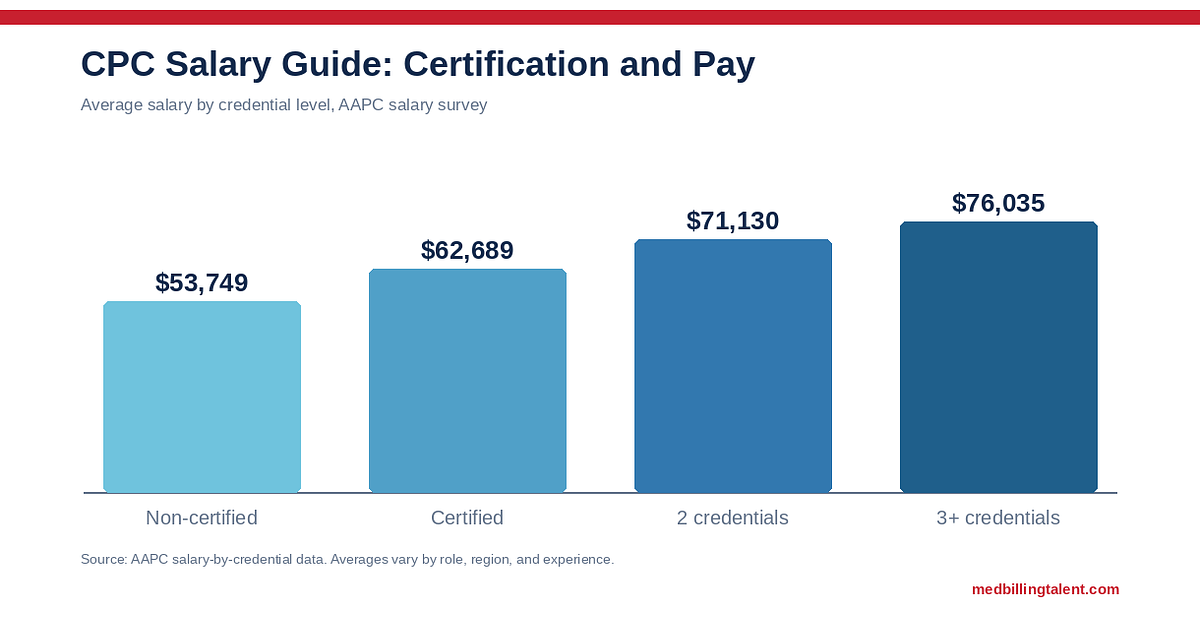
Yes. In AAPC's 2023 salary survey, medical records specialists without a certification averaged $53,749, while certified specialists averaged $62,689, about 16.6 percent more. Holding more than one AAPC credential pushes pay higher still:
- Non-certified: $53,749
- One certification: $62,689
- Two AAPC certifications: $71,130
- Three or more AAPC certifications: $76,035
These figures cover all certified AAPC members, not only CPC holders, but they show why coders add credentials over time.
CPC-A Salary: What Do Apprentice Coders Earn?
AAPC does not publish a separate average salary for CPC-A coders, and published numbers for apprentices vary widely by employer and region. In general, a CPC-A starts below the average CPC salary because the pay reflects limited experience, not a weaker credential. Pay usually improves once you gain experience and have the apprentice designation removed. Our CPC-A apprentice guide explains how to do that. To see real numbers for your area, check pay ranges on live postings, since many employers now list them.
CPC Coders' Salary: What Affects Your Pay?
Several factors shape what a CPC earns:
- Experience: Pay rises as you build years in the field.
- Work setting: Physician offices, hospital outpatient departments, billing companies, and payers all pay differently.
- Specialty: Surgical and other complex specialties often pay more than general coding.
- Remote or on-site: Remote roles open up higher-paying employers in other states, although competition is stiffer.
- Location: Pay varies by region, which matters most for on-site jobs.
- Extra credentials: Specialty certifications can lift your earning power.
How Does the CPC Compare with Other Credentials?
AAPC's data shows how the CPC stacks up against its other credentials, with averages of roughly $60,316 for the CPB (biller), $70,663 for the COC (outpatient coder), $71,747 for the CRC (risk adjustment coder), $74,475 for the CIC (inpatient coder), and $77,692 for the CPMA (auditor). Risk adjustment is one of the faster ways to move up, and you can read about it in our CRC certification guide and risk adjustment coder salary guide. If inpatient work interests you, compare it with the CCS certification salary guide or the inpatient coder salary guide.
How to Increase Your CPC Salary
- Remove the apprentice designation as soon as you qualify.
- Gain experience in a high-volume or complex specialty.
- Add a second credential, such as CRC or an auditing certification.
- Look at remote roles, which often have wider pay bands.
- Ask for a raise after you pass the exam, since certification often comes with an increase.
If you have not taken the exam yet, start with the CPC exam guide to plan your path.
Where to Find Remote Roles
Compare real pay ranges on our AAPC CPC jobs page, or search all remote medical coder jobs.