Denial Codes in Medical Billing: CARC and RARC Codes Explained (2026)
When a payer denies or reduces a claim, it explains why with codes, not sentences. Learning to read those codes is one of the core skills in denial management. This guide explains how medical billing denial codes work, then breaks down four of the most searched ones: CO 50, CO 226, PR 119, and PR 227.
What Are Denial Codes In Medical Billing?
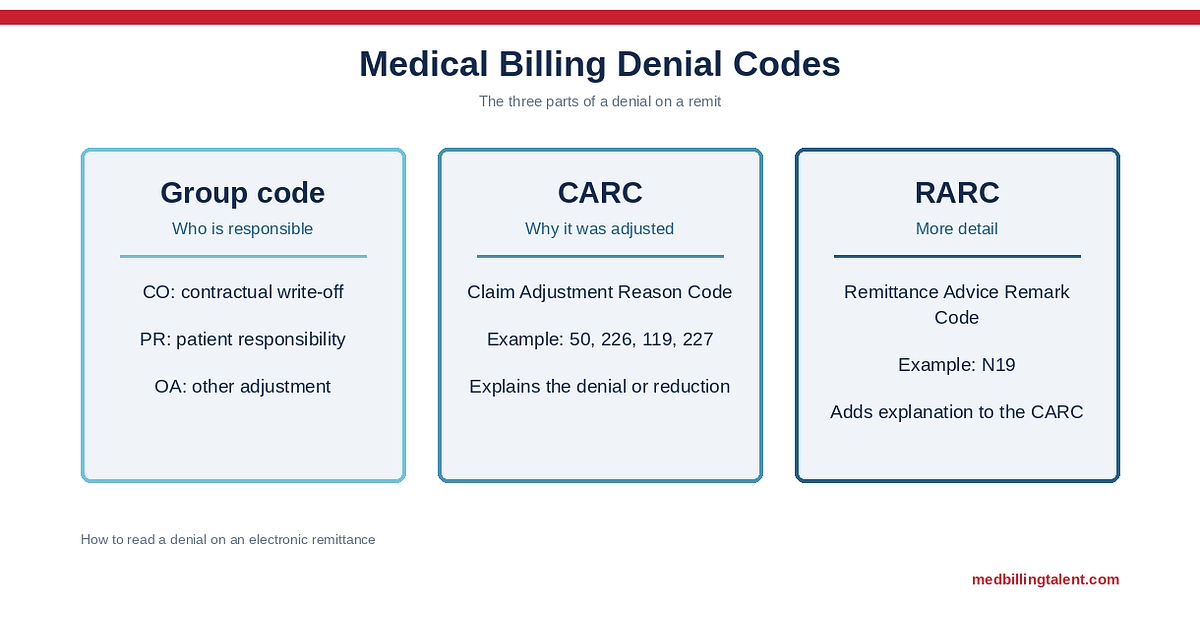
Denial codes appear on the electronic remittance advice and the explanation of benefits. A single denial usually has up to three parts:
- Group code: shows who is financially responsible for the amount. CO means contractual obligation, usually a provider write-off unless the claim is corrected. PR means patient responsibility. OA means other adjustment.
- CARC (Claim Adjustment Reason Code): explains why the claim or service line was paid differently than billed.
- RARC (Remittance Advice Remark Code): adds more detail to the CARC or gives processing information.
The prefix matters. The same reason code can appear with different group codes, and who owes the balance depends on which one you see. These code sets are national standards used in healthcare payment transactions, so a CARC means the same thing across payers, even though each payer handles the follow up differently.
How To Read A Denial On A Remittance
- Find the group code to see who is responsible.
- Read the CARC to learn the reason.
- Read the RARC, if there is one, for the specific detail.
- Check the payer's policy and your deadline to correct or appeal.
CO 50 Denial Code: Not Medically Necessary
CARC 50 means the services are non-covered because the payer does not consider them medically necessary. This usually happens when the documentation does not meet the payer's published medical policy.
What to do: check whether the diagnosis supports the procedure and whether prior authorization was needed. If the service was necessary, appeal with clinical notes that match the payer's criteria.
CO 226 Denial Code: Information Not Provided
CARC 226 means information requested from the billing or rendering provider was not provided, not provided on time, or was incomplete. Usually the payer asked for medical records or other details and did not get what it needed.
What to do: find the original request, send the complete information before the deadline, and reference the claim number so it is matched to the right claim.
PR 119 Denial Code: Benefit Maximum Reached
CARC 119 means the benefit maximum for this time period or occurrence has been reached. Think visit limits or dollar caps on a plan.
What to do: confirm the plan's limit with the payer and check whether the patient has other coverage. If the limit was applied correctly, the amount is generally the patient's responsibility under the PR group code. If it was applied in error, request a reprocessing or appeal.
PR 227 Denial Code: Information From The Patient Not Provided
CARC 227 means information requested from the patient, insured, or responsible party was not provided or was incomplete. Common examples include other insurance details or accident information.
What to do: contact the patient to get the missing information, send it to the payer, and ask for the claim to be reprocessed.
Remark Codes: What Is RARC N19?
A remark code adds explanation to a denial. RARC N19 means the procedure code billed is incidental to the primary procedure, so it is not paid separately. If you see it, review the coding and the payer's bundling edits. If the coding is correct, there may be no separate payment. If the service was truly separate, appeal with documentation showing why. For more on how billing and coding connect, see medical billing vs medical coding.
Common Claim Denial Reasons
Beyond the four codes above, common reasons for medical claim denials include missing or incorrect information, duplicate claims, timely filing, missing prior authorization, coordination of benefits issues, and coverage that has ended. Work through examples of each in AR denial scenarios.
Where To Find Remote Roles
Browse current openings on our Denial Management jobs page, or check Medical Billing Specialist jobs for related roles. Every listing on Med Billing Talent is remote and US-based.