Medical Biller Requirements: Education, Certifications & Skills (2026)
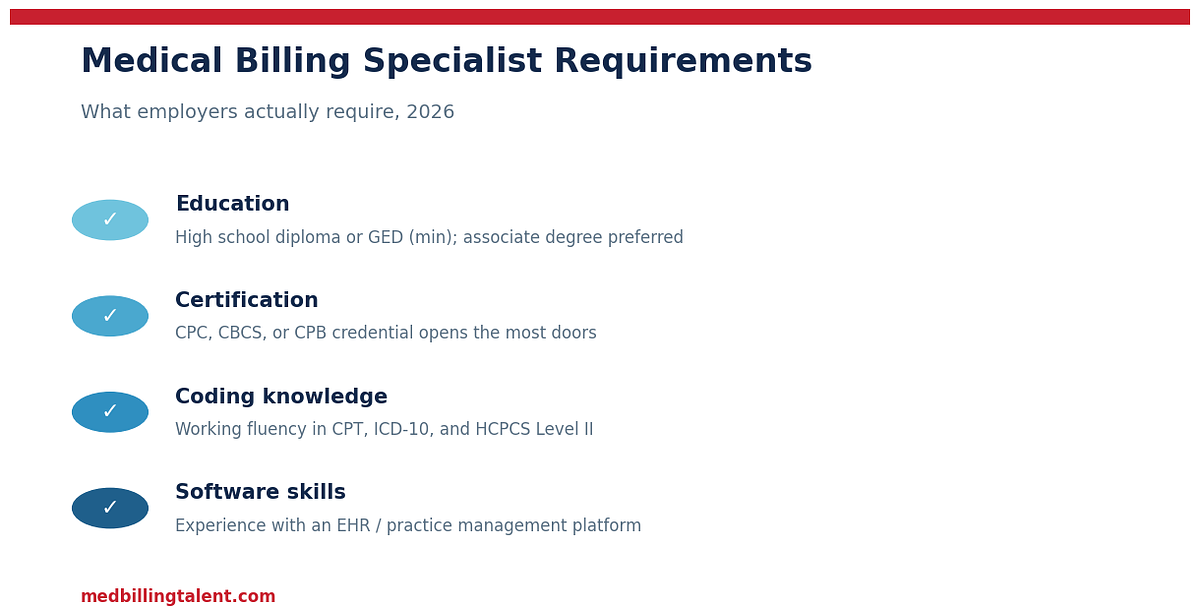
Most medical biller (medical billing specialist) roles are open to candidates without a four-year degree, but employers are specific about what they do expect: a baseline education level, working fluency in medical coding systems, and at least one recognized certification.
Education requirements
A high school diploma or GED is the minimum most employers require. Beyond that, an associate degree or a completed medical billing and coding certificate program (often six months to two years) is commonly preferred, though not always mandatory if you can pass a certification exam and demonstrate the coding knowledge in an interview or skills test.
Certifications that matter
- Certified Professional Coder (CPC) - issued by AAPC, considered the gold-standard entry-level coding certification. No experience is required to sit the exam, though candidates without two years of experience receive a CPC-A (Apprentice) designation until they log that time.
- Certified Billing and Coding Specialist (CBCS) - issued by the National Healthcareer Association (NHA), a solid entry-level credential covering billing, coding, compliance, and reimbursement together.
- Certified Professional Biller (CPB) - also from AAPC, focused specifically on the billing side (claims, reimbursement, appeals) rather than coding.
- Certified Coding Specialist (CCS) - from AHIMA, generally pursued after some hospital coding experience; carries more weight for inpatient and hospital-based roles.
A certification is not always a hard requirement, but postings that list it as "preferred" often filter out uncertified applicants first when the applicant pool is large.
Coding knowledge employers expect
You do not need to be a certified coder to work in billing, but working familiarity with three code sets comes up in nearly every job description:
- CPT (Current Procedural Terminology) - codes for procedures and services
- ICD-10-CM - diagnosis codes
- HCPCS Level II - codes for supplies, equipment, and services not covered by CPT
Software and technical skills
Hands-on experience with at least one practice management or EHR system is expected almost universally. Common platforms named in job postings include Athenahealth, Kareo/Tebra, eClinicalWorks, and Epic. You do not need experience with every platform - one or two, plus general comfort learning new systems, is usually enough.
Soft skills that show up repeatedly
- Attention to detail (claim errors are costly and slow down reimbursement)
- Ability to work independently against production or claims-processed targets
- Basic comfort with patient-facing billing questions and insurance communication
Where to find remote medical billing specialist roles
Med Billing Talent lists current remote, US-based openings for medical billing specialists, screened to exclude offshore and outsourced postings. Browse live Medical Billing Specialist jobs →
Related reading: Medical Biller Salary Guide | Medical Billing vs. Medical Coding | Entry-Level Medical Billing Jobs